One of Earth's last great wilderness areas — shoebills, hippos, crocodiles, and migrations that rival the Serengeti
The Sudd wetland supports extraordinary concentrations of birds and megafauna — a wilderness largely unknown to the outside world.
South Sudan harbours some of Africa's most spectacular and least-disrupted wildlife. The Sudd wetland, the White Nile corridor, and the savannah grasslands of Boma and Bandingilo combine to create one of the continent's last truly wild regions — a place where natural processes still operate at the landscape scale, largely unimpeded by human infrastructure.
The Sudd: Africa's Wetland Heart
The Sudd — from the Arabic sadd, meaning "barrier" — covers between 30,000 and 130,000 square kilometres depending on the season, making it the world's largest tropical wetland. During the peak flood season, when the White Nile overflows its banks and merges with the seasonal rainfall, the Sudd becomes a shallow inland sea of papyrus reed, water hyacinth, and floating vegetation islands (sudd). Channels weave through this labyrinth, some carrying water and others entirely blocked; the dividing line between land and water is constantly shifting.
This dynamism is precisely what makes the Sudd so ecologically productive. The annual flooding deposits nutrients across the floodplain, stimulating enormous pulses of plant growth that support a cascade of animal life — from microscopic invertebrates and fish to birds, reptiles, and mammals. The Sudd's papyrus swamps are among the most productive ecosystems on Earth per unit area, rivalling tropical rainforests in their output of organic matter.
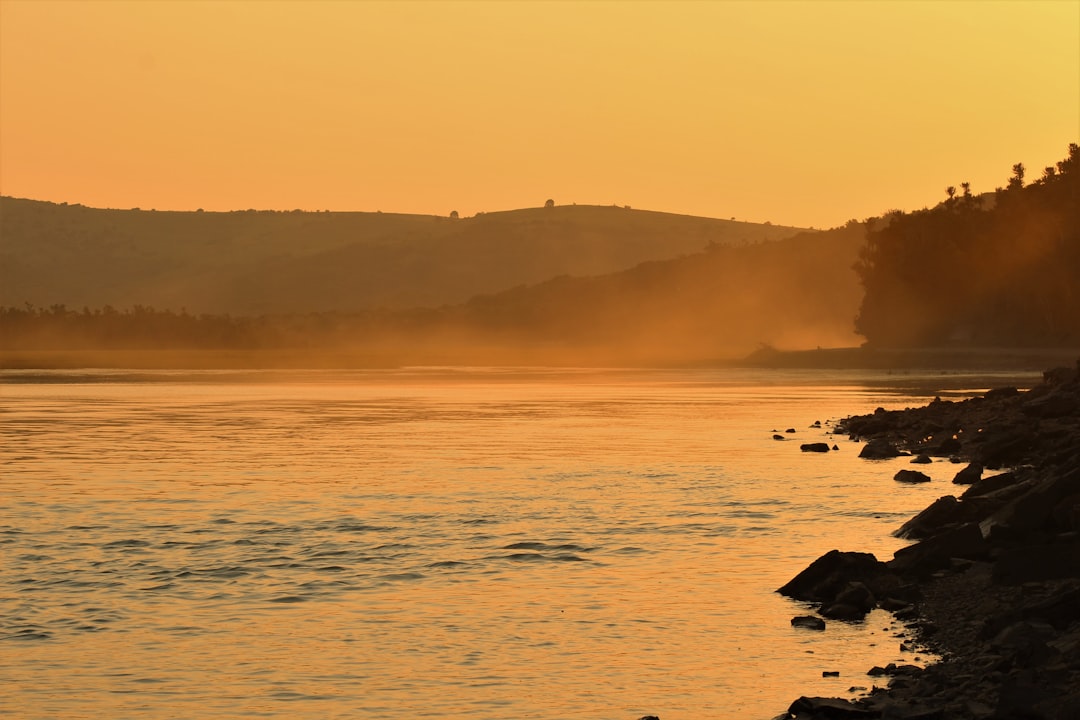
The Sudd from above — a labyrinth of channels, islands, and papyrus that stretches to every horizon.
Key Species
Wildlife of the Nile Corridor
🦢Vulnerable
Shoebill Stork
The Sudd's most iconic resident. This prehistoric-looking bird — with its enormous, shoe-shaped bill — hunts lungfish in the shallow papyrus channels with near-glacial patience. South Sudan holds one of the world's most important shoebill populations, estimated at several hundred individuals. Seeing one motionless among the reeds is an unforgettable wildlife experience.
🦛Vulnerable
Nile Hippopotamus
Large pods of hippos are found throughout the White Nile, spending their days submerged in the shallower reaches and emerging at dusk to graze the floodplain grasses. The population in South Sudan, once heavily depleted by civil war hunting, has shown signs of recovery in areas with reduced human pressure. The Nile at Juba and the river channels south of Malakal support resident herds.
🐊Least Concern
Nile Crocodile
Africa's largest reptile is abundant throughout the South Sudanese Nile system. Nile crocodiles can exceed 5 metres in length and live for 70 years or more. They bask on the river's sandy banks during the day and hunt fish, birds, and mammals at the water's edge at night. For the Nile's fishing communities, they represent both a hazard and a sign of a healthy ecosystem.
🐘Vulnerable
African Savannah Elephant
South Sudan's elephant population, concentrated in Boma National Park in the south-east and Nimule National Park on the Ugandan border, suffered catastrophically during the civil wars. Recovery is underway, with cross-border elephant corridors connecting South Sudan to Kenya and Uganda supporting seasonal migrations. These are among Africa's longest-ranging elephant populations.
🦌Least Concern
White-eared Kob
The white-eared kob is the emblem of South Sudan's wildlife spectacle. Each year, approximately 800,000 to 1.3 million kob, tiang, and mongalla gazelle migrate between the Sudd and the Boma Plateau in the south-east — a circuit that has been called the second-largest mammal migration on Earth after the Serengeti. The migration was largely undocumented until satellite tracking studies began in the 2000s.
🦁Vulnerable
African Lion
Lion populations survive in South Sudan's more remote protected areas — Boma, Bandingilo, and Southern National Parks — though they have been extirpated from much of their former range. They follow the kob migration, shadowing the vast herds across the floodplain grasslands. The country's commitment to protecting lion habitat will be a key test of its conservation capacity.
🐦Least Concern
African Fish Eagle
The piercing, two-note cry of the African fish eagle — arguably Africa's most evocative bird sound — rings out along every reach of the South Sudanese Nile. These powerful raptors pluck Nile perch and tilapia from the river's surface with extraordinary precision, swooping from high perches on riverside trees. They are year-round residents of the Nile corridor.
🐟Least Concern
Nile Perch
The Nile perch (Lates niloticus) is both a keystone species of the river system and a critical food source for millions of people. Adults can exceed 100 kg and 1.8 metres in length, making them one of the world's largest freshwater fish. South Sudan's rivers and the Sudd support enormous perch populations that sustain fishing communities throughout the country.
🦓Near Threatened
Nile Lechwe
The Nile lechwe is a semi-aquatic antelope uniquely adapted to the Sudd environment. With elongated hooves that spread on soft ground and hindquarters higher than the shoulder — enabling a distinctive bounding gallop through shallow water — it is a specialist of the flooded grasslands. South Sudan holds the largest remaining Nile lechwe population, estimated at 30,000–40,000 animals.
Protected Areas & National Parks
South Sudan has designated six national parks covering over 10% of its territory — an impressive commitment for one of the world's poorest nations. All were established before independence and several suffered severe degradation during the civil wars, but recovery efforts — often led in partnership with international conservation organisations — are underway.
🌿 Sudd Wetland (Ramsar Site)
📍 Upper Nile & Unity States📐 Up to 130,000 km² (seasonal)🌍 UNESCO Biosphere Reserve
The Sudd is South Sudan's most internationally significant natural feature — a Ramsar Wetland of International Importance and a UNESCO Biosphere Reserve. It provides critical habitat for shoebill storks, Nile lechwe, waterfowl, and the massive ungulate migration. Threats include proposed drainage schemes and increasing human settlement along its margins.
Boma is the eastern terminus of the great kob migration and one of South Sudan's most biodiverse protected areas. Its Boma Plateau grasslands rise to over 2,000 metres, creating a cool, mist-shrouded environment quite different from the lowland Sudd. The park links to Kenya's Omo Valley ecosystem, forming part of a critical cross-border wildlife corridor.
South Sudan's smallest but most accessible national park sits astride the White Nile at the border with Uganda, where the river is still fast and rocky before it slows on the plains. Nimule hosts one of the most stable wildlife populations in the country, including hippo pods in the Nile, resident elephants crossing from Uganda, and Nile crocodiles on the river's banks.
Conservation Challenges
South Sudan's wildlife faces acute pressures. Decades of civil war normalised the use of weapons and disrupted conservation infrastructure; poaching for bushmeat and ivory continues in many areas. Proposed large-scale drainage of parts of the Sudd for agricultural development threatens the wetland's hydrology. Climate variability — shifting rainfall patterns, more intense droughts — is altering the flood cycles that the entire ecosystem depends upon.
Yet the scale of what remains is extraordinary. South Sudan is one of the few places in Africa where megafauna and their habitats are still largely intact at the landscape level. The kob migration, the shoebill's papyrus wilderness, and the great riverside herds of the Nile corridor represent natural heritage of global significance. The challenge for South Sudan — and for the international community that cares about wild Africa — is to protect this heritage while meeting the legitimate development needs of the continent's newest and most resource-challenged nation.
🔍 Wildlife Travel Note
Wildlife tourism in South Sudan remains in its earliest stages and requires careful planning with specialist operators. The country's security situation varies by region; travellers should consult current advisories. Nimule National Park, near the Ugandan border, is the most accessible option for visitors coming from Juba or Uganda.