South Sudan became an independent state on 9 July 2011, making it the youngest country on Earth. A landlocked nation in the heart of East-Central Africa, it is bounded by Sudan to the north, Ethiopia to the east, Kenya, Uganda, and the Democratic Republic of Congo to the south, and the Central African Republic to the west.
Geography
South Sudan covers an area of approximately 644,329 square kilometres — larger than France. The country's terrain is enormously varied: from the flat, seasonally flooded plains of the Sudd in the centre and north, to the mountain ranges of Imatong and Dongotona in the south-east, which rise to over 3,000 metres. The Imatong Mountains, near the border with Uganda, contain the country's highest peak, Mount Kinyeti, standing at 3,187 metres.
The dominant geographical feature, however, is water. The White Nile and its many tributaries — the Sobat, Bahr el Ghazal, Bahr el Jebel, and the Pibor — drain almost the entire country. During the rainy season, between April and October, vast areas of the interior flood, creating the seasonal wetlands that have shaped South Sudan's ecology and human settlement patterns for millennia.
The climate is tropical, with a marked dry season and wet season. Temperatures across most of the country range between 20°C and 40°C throughout the year, with the southern highlands considerably cooler. Juba, in the south, receives around 970mm of rain annually, mostly concentrated between April and November.
The Capital: Juba
Juba is both the capital and the largest city of South Sudan, with a population estimated at between 500,000 and one million people — figures that are difficult to verify given the constant movement of people and the challenges of census-taking in a young nation. The city sits on the eastern bank of the White Nile, approximately 1,250 kilometres upstream from Khartoum.
Before 2011, Juba was a modest town functioning mainly as the administrative centre for the southern region of Sudan. Since independence, it has grown rapidly, if chaotically — new roads, bridges, hotels, and government buildings have risen alongside informal settlements that house the many thousands who have moved to the capital in search of opportunity. The Nile, always present at the city's western edge, provides a constant reminder of South Sudan's most fundamental resource.
The city is home to the national government, international organisations, embassies, and a vibrant if challenging business environment. The Juba Bridge across the White Nile connects the capital to the western bank and is one of the country's most important pieces of infrastructure. A second, longer bridge — the Freedom Bridge — has increased connectivity between Juba's different neighbourhoods.
People and Languages
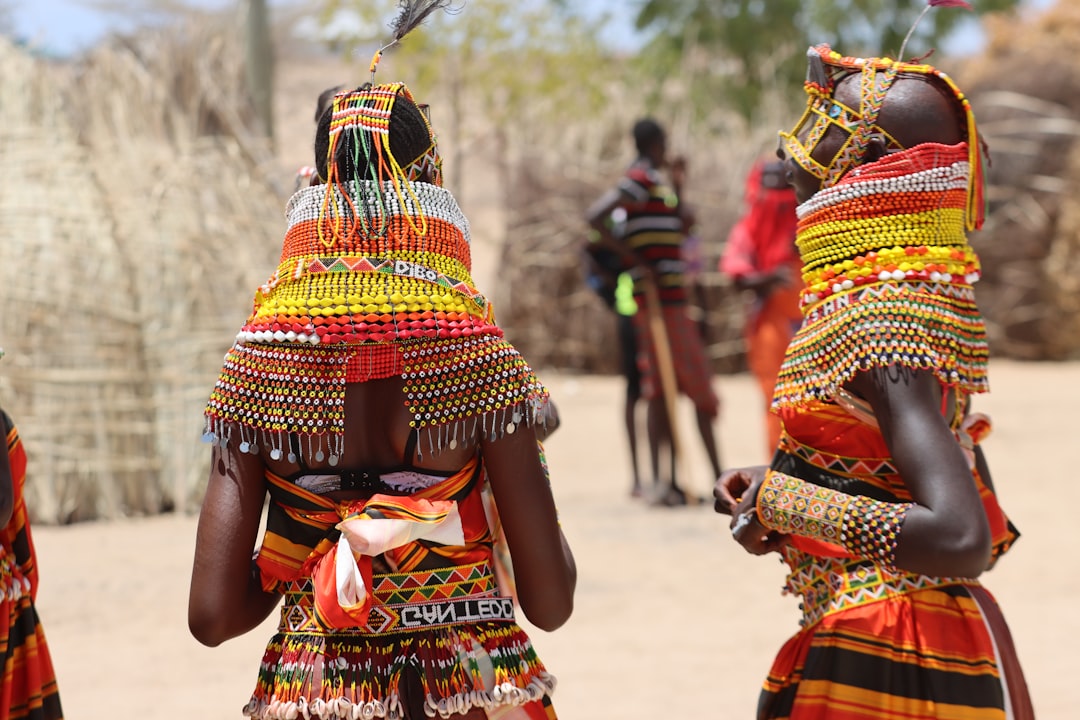
South Sudan is home to more than 60 distinct ethnic groups, each with its own language, customs, and territorial heritage. The largest are the Dinka, who make up roughly 35–40% of the population, and the Nuer, who account for approximately 15%. Other significant groups include the Shilluk, Azande, Bari, Kakwa, Kuku, Murle, Mandari, and many others.
English is the official language of South Sudan, a legacy of British colonial rule in what was then the Anglo-Egyptian Sudan. Arabic — specifically Juba Arabic, a creole variety — is widely spoken as a lingua franca, particularly in Juba and the urban areas. Most South Sudanese speak their ethnic mother tongue as a first language, with multilingualism being the norm rather than the exception.
🌍 Did You Know?
South Sudan is home to one of the largest wildlife migrations on Earth. Each year, an estimated 1.3 million white-eared kob, tiang, and mongalla gazelle migrate across the Sudd and the Boma Plateau — a spectacle that rivals the Serengeti's wildebeest migration in scale.
Economy and Natural Resources
South Sudan possesses significant oil reserves, concentrated largely in the Upper Nile and Unity states along the Nile corridor. Oil revenues have dominated the national economy since independence, accounting for over 90% of government income in some years. However, overdependence on a single commodity, combined with conflict and governance challenges, has created economic volatility. Agricultural potential — particularly along the Nile floodplains — remains largely untapped, offering one of the most promising paths to long-term food security and economic diversification.
The country also has abundant water resources, fertile land, tropical timber, and mineral deposits including gold and iron ore. The challenge for South Sudan in the coming decades will be to develop these resources in ways that benefit all its people, while preserving the extraordinary natural environment — centred on the Nile — that makes this young nation unique.